
General News
UN highlights policing reforms to address systemic racism


UN rights chief Michelle Bachelet says radical policing reforms are needed to address systemic racism affecting people of African descent around the world.
Bachelet said on Monday as her Office published a series of recommendations prompted by the killing of George Floyd.
On May 25, 2020, George Floyd, a 46-year-old black man, was murdered in Minneapolis, Minnesota, United States while being arrested on suspicion of using a counterfeit 20 dollars bill.
During the arrest, Derek Chauvin, a white police officer with the Minneapolis Police Department, knelt on Floyd’s neck for over nine minutes after he was handcuffed and lying face down.
Prior to being placed on the ground, Floyd had exhibited signs of anxiety, complaining about having claustrophobia and being unable to breathe.
After being restrained he became more distressed, complaining of breathing difficulties and the knee on his neck, and expressing fear of imminent death.
Among the new measures proposed in the High Commissioner’s report on racial justice and equality, authorities are urged to reassess whether officers should continue to be the first responders to individuals with mental health problems.
In these and other police actions, the report found that law enforcement officers were rarely held accountable for human rights violations and crimes against people of African descent.
This was owing in part to “deficient investigations, a lack of independent and robust oversight and a widespread “presumption of guilt” against people of African descent.
“The status quo is untenable,” Bachelet said “Systemic racism needs a systemic response.
“We need a transformative approach that tackles the interconnected areas that drive racism, and lead to repeated, wholly avoidable, tragedies like the death of George Floyd”.
In a call to all states “to stop denying, and start dismantling, racism”, the UN rights chief appealed to them “to end impunity and build trust; to listen to the voices of people of African descent and to confront past legacies and deliver redress”.
The High Commissioner’s report collected information on more than 190 cases where people had died in police custody around the world.
It uncovered many similarities and patterns, such as the hurdles families encountered in trying to access justice, according to Peggy Hicks, Director of Thematic Engagement at the Office of the High Commissioner for Human Rights (OHCHR).
“Accountability is crucial and families do have some form of satisfaction in seeing someone in prison for a crime that is as violent as the murder of George Floyd which we saw on video tape.
“But of course, there are so many cases where there isn’t a video tape and there are even cases where there are video tapes but justice is not being dealt in those cases,” she said.
Across numerous countries, notably in North and South America and in Europe, people of African descent disproportionately live in poverty and face serious barriers.
They face serious barriers in accessing education, healthcare, employment, housing and clean water, as well as to political participation and other fundamental human rights, the report maintained.
These obstacles to fulfilling basic human rights contributed to a tradition of discrimination linked directly to colonialism and slave trading which resulted in the “dehumanisation” of people of African descent, according to the report.
“We realised that a main part of the problem is that many people believe the misconceptions that the abolition of slavery, the end of the transatlantic trade and colonialism have removed the racially discriminatory structures built by those practices but we found that this is not true,” said UN Human Rights Office’s Mona Rishmawi, Chief, Rule of Law, Equality and Non-Discrimination Branch.
As a result, countries have not paid adequate attention to the negative impact of policies on minority populations and the “conscious and unconscious bias” associated with it, the OHCHR officer insisted.
For people of African descent, these legacy impacts are “a part of their daily life and the daily reality of dehumanisation, marginalisation and denial of their rights”.
The High Commissioner’s report was set in motion by the Human Rights Council after international outrage at the killing of United States citizen George Floyd in 2020.
His death was caused by police officer Derek Chauvin who was captured on video kneeling on Mr Floyd’s neck for more than nine minutes.
After a six-week trial this year, Chauvin was found guilty of second-degree murder and sentenced last week to prison for more than two decades. (NAN)


At a solemn ordination service in Abuja, senior church leaders have called on pastors to make the well-being of their congregations a top priority, following the example of Jesus Christ.
Speaking during the priesthood ordination and installation of a Sub Dean at the Cathedral Church of Advent, Life Camp, Abuja, the retired Bishop of the Anglican Diocese of Okene, Rt. Rev. Emmanuel Ajulo, described pastors as shepherds charged with the care of their flock. He urged them to shun worldly distractions and focus on meeting the spiritual and material needs of their members.
Bishop Ajulo also encouraged the newly ordained priests to remain faithful to their calling by teaching God’s word without compromise.
In his charge, the Primate of the Church of Nigeria, Anglican Communion, Most Rev. Henry Ndukuba, urged the new clergy to preach the undiluted gospel and foster religious harmony wherever they serve. He expressed confidence that their new roles would help promote peace and unity in society.
The service also featured prayers for national leaders and divine intervention in addressing the current global economic challenges.
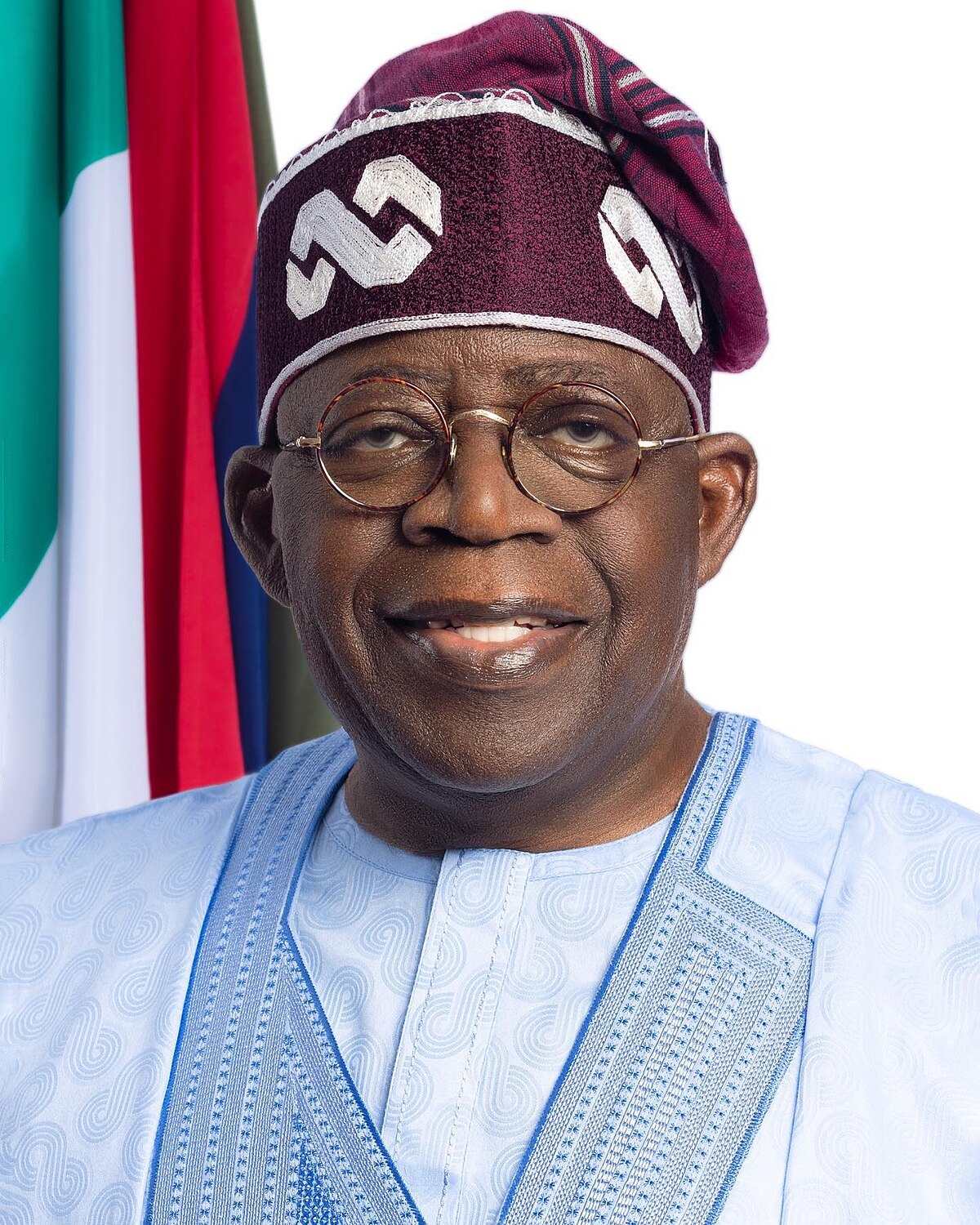
In a dramatic show of faith and patriotism, over 1,000 fiery prayer warriors from across Nigeria will descend on Ilorin, Kwara State, this Saturday, lifting their voices in intense intercession for President Bola Tinubu’s success and Nigeria’s survival in the face of biting economic woes and mounting insecurity.
The spiritual siege, themed “Walking in Domini”, is the maiden convention of the Organisation of African Instituted Churches (OAIC), with its Kwara State Chairman, Evangelist Thomas Adeboye, vowing that “heaven will hear and respond to Nigeria’s cry.”
Aside from marathon prayers, the gathering will roll out free medical outreach to locals across Kwara’s LGAs, a gesture aimed at touching both body and soul.
Adeboye, lamenting Nigeria’s “troubling economic and security realities”, called for a nationwide prayer uprising, insisting that Tinubu has shown the will to revive the nation but needs massive divine backing to succeed.
“Banditry, a collapsing economy, and political tension demand we seek God’s face like never before,” he declared. “We will storm heaven for wisdom for the President and governors to steer Nigeria to safety.”
The convention will also feature awards to distinguished personalities, soul-lifting worship, fiery sermons, and unity-driven lectures—all capped with thunderous prayers for Nigeria’s redemption.
Adeboye urged the President to ensure every policy has “a human face,” stressing that Nigerians must not only endure but also enjoy the fruits of governance.
With the OAIC promising to reaffirm believers’ authority in Christ and rally spiritual boldness in the face of national challenges, Ilorin is set to become the epicentre of a powerful spiritual warfare for Nigeria’s destiny.
…Church leaders accuse Welsh counterparts of “spiritual decadence” and “abandonment of faith”
The Church of Nigeria (Anglican Communion) has issued a forceful condemnation of the election of Rt. Rev. Cherry Vann, an openly lesbian cleric, as the Archbishop of Wales. The move is the latest in a series of developments that have deepened divisions within the global Anglican Communion over sexuality and doctrine.
In a statement from Primate The Most Rev’d Henry Ndukuba, the church denounced the election as a “serious departure from biblical teaching” and a sign of “spiritual decadence” and “an outright abandonment of the faith once delivered to the saints.”
Archbishop Ndukuba warned that Bishop Vann’s elevation compromises the Anglican Church’s global mission and could obstruct evangelism. He compared the situation to the controversial tenure of Most Rev. Katherine Jefferts Schori, former Presiding Bishop of the U.S. Episcopal Church, who also faced intense criticism from conservative Anglicans for her progressive views.
The Primate accused Bishop Vann of being complicit in the “ongoing crisis” around same-sex issues, stating that the election is a “clear revelation that many who claim to be members of the body of Christ cannot endure sound doctrine” (2 Timothy 4:3–4).
The Church of Nigeria called on Anglicans worldwide to reject “rebels” and “apostates” and to instead support conservative bodies like the Global Anglican Future Conference (GAFCON).
“The Church of Nigeria (Anglican Communion) condemns, unequivocally rejects, and will not recognize the election of Rt. Rev. Cherry Vann as Archbishop of Wales,” Ndukuba declared. He concluded with a solemn warning that without repentance, the Church in Wales risks losing “complete relevance” and its leaders will face judgment.

68 Nations Gather at Dunamis Glory Dome for 2025 Flaming Fire Conference
The 2025 International Ministers Flaming Fire Conference has drawn thousands of worshippers, church leaders, and delegates from more than 68...

“I Am Living Proof That God Still Saves – Faith Oyedepo Shares Testimony”
Faith Oyedepo, wife of the Founder and General Overseer of the Living Faith Church Worldwide, Bishop David Oyedepo, has shared...
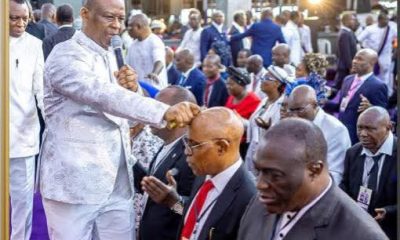

Olukoya Ordains 5,000 Pastors at MFM Global Ministers Conference
The General Overseer of Mountain of Fire and Miracles Ministries (MFM) Worldwide, Dr. Daniel Olukoya, has ordained 5,000 men and...
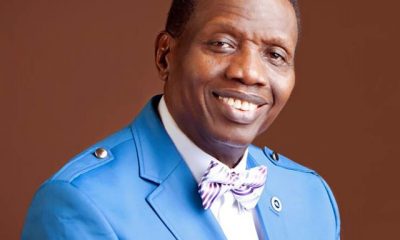

From Barefoot Village Boy to Global Spiritual Leader: Adeboye Inspires at Church’s 50th Anniversary
Pastor Enoch Adeboye, General Overseer of the Redeemed Christian Church of God (RCCG), has shared a moving account of his...

Clergy Urged To Put Members’ Welfare Above All Else
At a solemn ordination service in Abuja, senior church leaders have called on pastors to make the well-being of their...