
General News
Osinbajo highlights FG’s interventions in healthcare, education, others


Vice President Yemi Osinbajo says the Federal Government has, over the years, deployed significant resources to address challenges in education and healthcare.
He said that the Federal Government was committed toward addressing human capital development and related issues in the country with the same zeal it showed in the implementation of the Social Investment Programmes.
Osinbajo’s spokesman, Laolu Akande, in a statement on Saturday in Abuja, said that the vice president virtually delivered a keynote address at the Rauf Aregbesola Leadership Colloquium 2021.
The colloquium with the theme, “Government and Big Development: Realities and Solutions for Nigeria,’’ was organised to mark the birthday of the Minister of Interior.
Osinbajo harped on the circumstances where governments might need to intervene directly, including in human capital development.
“Direct state government intervention is crucial; you cannot have such conditions such as in the country and not have some direct interventions from government.
“The point is that, for many of the challenges that face a developing economy, there is very little, immediate term profit for private actors in addressing those challenges, but of course, there are huge medium to long term social and economic gains to be reaped.
“In order to fill that gap, government must come in, government must intervene.
“This intervention in my view, are the issues of big development. How do you educate the largest youth population in Africa?
“How do you ensure healthcare for that large number of people, and all of the various issues? These are the big development issues that confront us; and we must be able to find solutions to them,”
The vice president said that the present administration, in its first budget, devoted for N500 billion to our Social Investment Programme.
He said that 500,000 young graduates were engaged in the N-Power programme, and 9.5 million children being fed daily in the school feeding programme just before COVID-19 across 34 states.
“The programme employs well over 135,000 cooks, and over 100,000 small-holder farmers linked to the programme, supplying locally sourced ingredients.
“ At some point, this translated to 594 cattle, 138,000 chickens, 6.8 million eggs, 83 metric tons of fish that are procured, prepared, and distributed every week.
“The higher outcomes for enrollment of pupils in school, retention and performance of students have all been empirically verified.
“There was also the Government Enterprise and Empowerment Programme (GEEP) – TraderMoni, MarketMoni initiatives where micro credits were offered to traders (about 2 million traders in all),” he said.
He explained that the programmes were important because they were in many ways government efforts at directly creating opportunities.
According to him, a country such as Nigeria, clearly requires a social welfare programme.
Osinbajo said that a situation where those who could work and those who had no work and the vulnerable were provided with one way of earning something and provided with opportunities was crucial.
In the health sector, he said that since the inception of the administration, it had done a few other direct social investment-type things aimed at human capital development.
“After the National Health Act was passed in 2014, the Federal Government in 2018 began including the one per cent minimum portion of the Consolidated Revenue Fund – amounting to N55 billion to fund the Basic Health Care Provision Fund (BHCPF).
“The Fund is designed to deliver a guaranteed set of health services to all Nigerians, through the national network of Primary Health Care Centers.”
In education, Osinbajo said that since 2015 , the Federal Government had disbursed more than N170 billion in matching grants to states and the FCT under the Universal Basic Education Programme.
He said that N8 billion had been disbursed in Special Education Grants to States and private providers of Special Education, and N34 billion from the Teachers Professional Development Fund to the 36 states and the FCT.
The vice president added that the interventions were in line with the administration’s commitment of lifting 100 million people out of poverty.
He commended the efforts and the achievements of the former governor of Osun State with his socialist ideology.
“He stands out as a reason why one should at least have some socialist blood while recognising the fundamental role of markets and the public sector,” he said.
Aside the convener, other speakers and special guests at the colloquium moderated by notable broadcaster Mr Boason Omofaye, included the Governor of Kaduna State, Mallam Nasir El-Rufai and the Statistician-General of the Federation, Mr Yemi Kale.
The President of the Nigerian Labour Congress, Mr Ayuba Wabba and the Vice Chairman of the Ibadan School of Government and Public Policy, Prof. Tunji Olaopa, among others also featured. (NAN)


At a solemn ordination service in Abuja, senior church leaders have called on pastors to make the well-being of their congregations a top priority, following the example of Jesus Christ.
Speaking during the priesthood ordination and installation of a Sub Dean at the Cathedral Church of Advent, Life Camp, Abuja, the retired Bishop of the Anglican Diocese of Okene, Rt. Rev. Emmanuel Ajulo, described pastors as shepherds charged with the care of their flock. He urged them to shun worldly distractions and focus on meeting the spiritual and material needs of their members.
Bishop Ajulo also encouraged the newly ordained priests to remain faithful to their calling by teaching God’s word without compromise.
In his charge, the Primate of the Church of Nigeria, Anglican Communion, Most Rev. Henry Ndukuba, urged the new clergy to preach the undiluted gospel and foster religious harmony wherever they serve. He expressed confidence that their new roles would help promote peace and unity in society.
The service also featured prayers for national leaders and divine intervention in addressing the current global economic challenges.
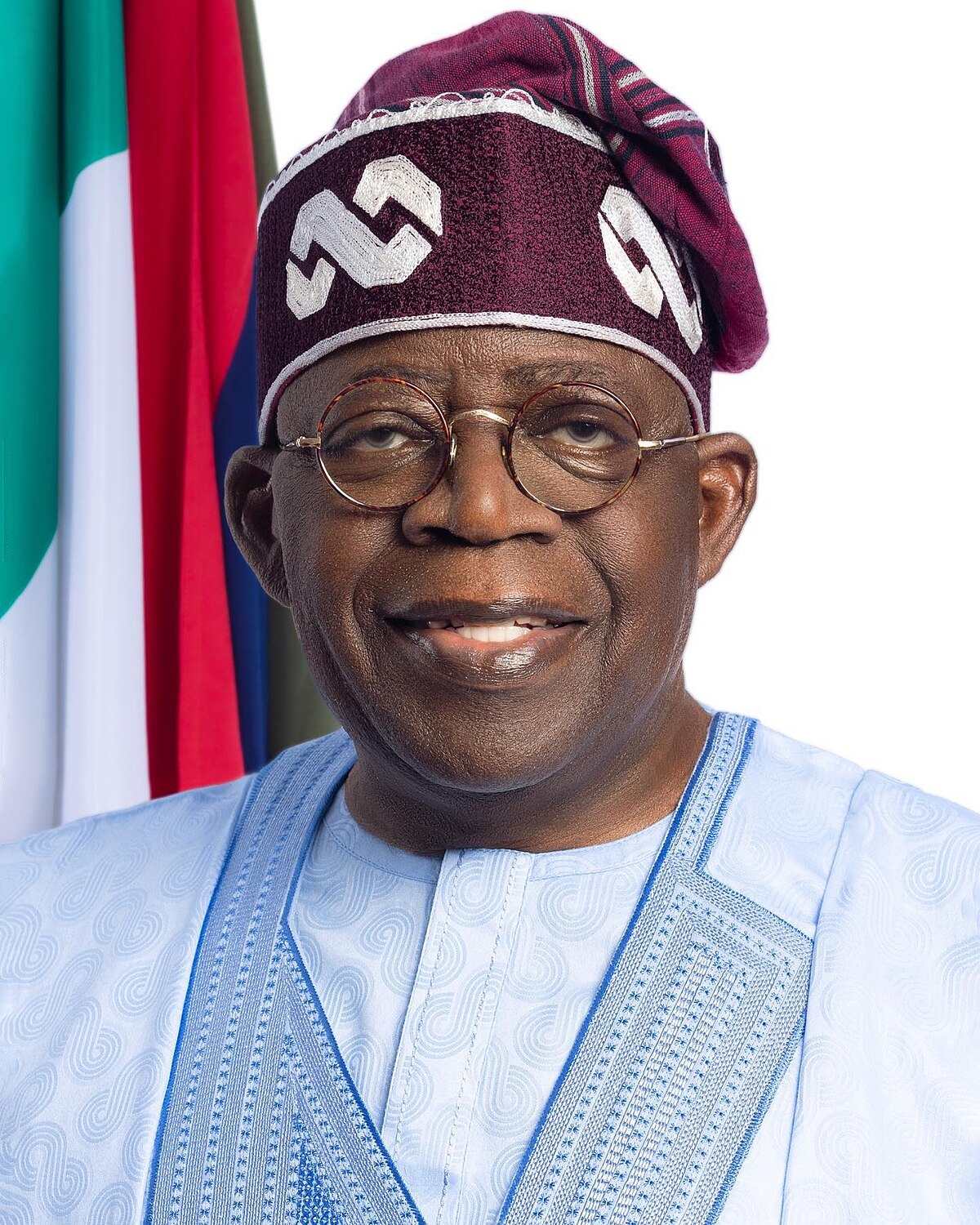
In a dramatic show of faith and patriotism, over 1,000 fiery prayer warriors from across Nigeria will descend on Ilorin, Kwara State, this Saturday, lifting their voices in intense intercession for President Bola Tinubu’s success and Nigeria’s survival in the face of biting economic woes and mounting insecurity.
The spiritual siege, themed “Walking in Domini”, is the maiden convention of the Organisation of African Instituted Churches (OAIC), with its Kwara State Chairman, Evangelist Thomas Adeboye, vowing that “heaven will hear and respond to Nigeria’s cry.”
Aside from marathon prayers, the gathering will roll out free medical outreach to locals across Kwara’s LGAs, a gesture aimed at touching both body and soul.
Adeboye, lamenting Nigeria’s “troubling economic and security realities”, called for a nationwide prayer uprising, insisting that Tinubu has shown the will to revive the nation but needs massive divine backing to succeed.
“Banditry, a collapsing economy, and political tension demand we seek God’s face like never before,” he declared. “We will storm heaven for wisdom for the President and governors to steer Nigeria to safety.”
The convention will also feature awards to distinguished personalities, soul-lifting worship, fiery sermons, and unity-driven lectures—all capped with thunderous prayers for Nigeria’s redemption.
Adeboye urged the President to ensure every policy has “a human face,” stressing that Nigerians must not only endure but also enjoy the fruits of governance.
With the OAIC promising to reaffirm believers’ authority in Christ and rally spiritual boldness in the face of national challenges, Ilorin is set to become the epicentre of a powerful spiritual warfare for Nigeria’s destiny.
…Church leaders accuse Welsh counterparts of “spiritual decadence” and “abandonment of faith”
The Church of Nigeria (Anglican Communion) has issued a forceful condemnation of the election of Rt. Rev. Cherry Vann, an openly lesbian cleric, as the Archbishop of Wales. The move is the latest in a series of developments that have deepened divisions within the global Anglican Communion over sexuality and doctrine.
In a statement from Primate The Most Rev’d Henry Ndukuba, the church denounced the election as a “serious departure from biblical teaching” and a sign of “spiritual decadence” and “an outright abandonment of the faith once delivered to the saints.”
Archbishop Ndukuba warned that Bishop Vann’s elevation compromises the Anglican Church’s global mission and could obstruct evangelism. He compared the situation to the controversial tenure of Most Rev. Katherine Jefferts Schori, former Presiding Bishop of the U.S. Episcopal Church, who also faced intense criticism from conservative Anglicans for her progressive views.
The Primate accused Bishop Vann of being complicit in the “ongoing crisis” around same-sex issues, stating that the election is a “clear revelation that many who claim to be members of the body of Christ cannot endure sound doctrine” (2 Timothy 4:3–4).
The Church of Nigeria called on Anglicans worldwide to reject “rebels” and “apostates” and to instead support conservative bodies like the Global Anglican Future Conference (GAFCON).
“The Church of Nigeria (Anglican Communion) condemns, unequivocally rejects, and will not recognize the election of Rt. Rev. Cherry Vann as Archbishop of Wales,” Ndukuba declared. He concluded with a solemn warning that without repentance, the Church in Wales risks losing “complete relevance” and its leaders will face judgment.

68 Nations Gather at Dunamis Glory Dome for 2025 Flaming Fire Conference
The 2025 International Ministers Flaming Fire Conference has drawn thousands of worshippers, church leaders, and delegates from more than 68...

“I Am Living Proof That God Still Saves – Faith Oyedepo Shares Testimony”
Faith Oyedepo, wife of the Founder and General Overseer of the Living Faith Church Worldwide, Bishop David Oyedepo, has shared...
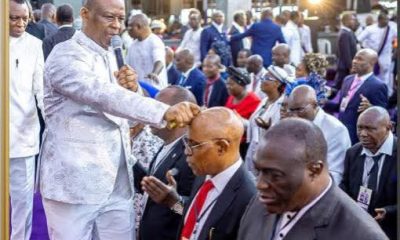

Olukoya Ordains 5,000 Pastors at MFM Global Ministers Conference
The General Overseer of Mountain of Fire and Miracles Ministries (MFM) Worldwide, Dr. Daniel Olukoya, has ordained 5,000 men and...
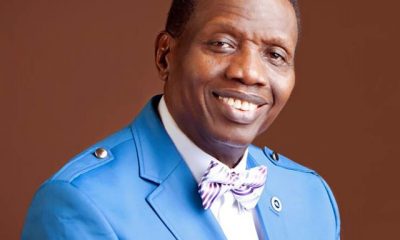

From Barefoot Village Boy to Global Spiritual Leader: Adeboye Inspires at Church’s 50th Anniversary
Pastor Enoch Adeboye, General Overseer of the Redeemed Christian Church of God (RCCG), has shared a moving account of his...

Clergy Urged To Put Members’ Welfare Above All Else
At a solemn ordination service in Abuja, senior church leaders have called on pastors to make the well-being of their...