
General News
Remittance inflows to Nigeria declined by 28% in 2020 – World Bank


The World Bank says remittance inflows to Nigeria declined by 28 per cent in 2020 because of COVID-19 pandemic.
The Bank also said remittance flows fell for Sub-Saharan Africa by 12.5 per cent, according to its Migration and Development Brief 33 Phase 11 entitled: “COVID-19 Crisis Through a Migration Lens’’ published on Thursday.
The report said the decline in remittance flows to Nigeria was largely responsible for the fall in remittance flows to Sub-Saharan Africa.
“The decline in flows to Sub-Saharan Africa was almost entirely due to a 28 per cent decline in remittance flows to Nigeria.
“Excluding flows to Nigeria, remittances to Sub-Saharan Africa increased by 2.3 per cent, demonstrating resilience,’’ the report stated.
According to the report, the relatively strong performance of remittance flows during the COVID-19 crisis has also highlighted the importance of timely availability of data.
It stated that given its growing significance as a source of external financing for low- and middle-income countries, there was need for better collection of data on remittances.
It emphasised that there was need for better collection of data on remittances, in terms of frequency, timely reporting, and granularity by corridor and channel.
The report quoted Dilip Ratha, lead author of the report on migration and remittances, as saying “the resilience of remittance flows is remarkable. Remittances are helping to meet families’ increased need for livelihood support.
“They can no longer be treated as small change.
“The World Bank has been monitoring migration and remittance flows for nearly two decades, and we are working with governments and partners to produce timely data and make remittance flows even more productive.”
With global growth expected to rebound further in 2021 and 2022, however, remittance flows to low- and middle- income countries are expected to increase by 2.6 per cent to 553 billion dollars in 2021 and by 2.2 per cent to 565 billion dollars in 2022.
The report stated that global average cost of sending 200 dollars remained high at 6.5 per cent in the fourth quarter of 2020, more than double the Sustainable Development Goal target of three per cent.
It stated that Sub-Saharan Africa continued to have the highest average cost (8.2 per cent) adding, supporting the remittance infrastructure and keeping remittances flowing includes efforts to lower fees.
In addition, it stated that the decline in recorded remittance flows in 2020 was smaller than the one during the 2009 global financial crisis (4.8 per cent).
It was also far lower than the fall in Foreign Direct Investment (FDI) flows to low- and middle-income countries, which, excluding flows to China fell by over 30 per cent in 2020.
As a result, remittance flows to low- and middle-income countries surpassed the sum of FDI (259 dollars billion) and overseas development assistance (179 dollars billion) in 2020.
The main drivers for the steady flow included fiscal stimulus that resulted in better-than-expected economic conditions in host countries, a shift in flows from cash to digital and from informal to formal channels, and cyclical movements in oil prices and currency exchange rates.
The true size of remittances, which includes formal and informal flows, is believed to be larger than officially reported data, though the extent of the impact of COVID-19 on informal flows is unclear.
“As COVID-19 still devastates families around the world, remittances continue to provide a critical lifeline for the poor and vulnerable,” said Michal Rutkowski, Global Director of the Social Protection and Jobs Global Practice at the World Bank.
“Supportive policy responses, together with national social protection systems, should continue to be inclusive of all communities, including migrants.”
In addition, it stated that the relatively strong performance of remittance flows during the COVID-19 crisis had also highlighted the importance of timely availability of data.
“Given its growing significance as a source of external financing for low- and middle-income countries, there is a need for better collection of data on remittances, in terms of frequency, timely reporting, and granularity by corridor and channel’’.
The World Bank is assisting member states in monitoring the flow of remittances through various channels, the costs and convenience of sending money, and regulations to protect financial integrity that affect remittance flows.
It is working with the G20 countries and the global community to reduce remittance costs and improve financial inclusion for the poor. (NAN)


At a solemn ordination service in Abuja, senior church leaders have called on pastors to make the well-being of their congregations a top priority, following the example of Jesus Christ.
Speaking during the priesthood ordination and installation of a Sub Dean at the Cathedral Church of Advent, Life Camp, Abuja, the retired Bishop of the Anglican Diocese of Okene, Rt. Rev. Emmanuel Ajulo, described pastors as shepherds charged with the care of their flock. He urged them to shun worldly distractions and focus on meeting the spiritual and material needs of their members.
Bishop Ajulo also encouraged the newly ordained priests to remain faithful to their calling by teaching God’s word without compromise.
In his charge, the Primate of the Church of Nigeria, Anglican Communion, Most Rev. Henry Ndukuba, urged the new clergy to preach the undiluted gospel and foster religious harmony wherever they serve. He expressed confidence that their new roles would help promote peace and unity in society.
The service also featured prayers for national leaders and divine intervention in addressing the current global economic challenges.

In a dramatic show of faith and patriotism, over 1,000 fiery prayer warriors from across Nigeria will descend on Ilorin, Kwara State, this Saturday, lifting their voices in intense intercession for President Bola Tinubu’s success and Nigeria’s survival in the face of biting economic woes and mounting insecurity.
The spiritual siege, themed “Walking in Domini”, is the maiden convention of the Organisation of African Instituted Churches (OAIC), with its Kwara State Chairman, Evangelist Thomas Adeboye, vowing that “heaven will hear and respond to Nigeria’s cry.”
Aside from marathon prayers, the gathering will roll out free medical outreach to locals across Kwara’s LGAs, a gesture aimed at touching both body and soul.
Adeboye, lamenting Nigeria’s “troubling economic and security realities”, called for a nationwide prayer uprising, insisting that Tinubu has shown the will to revive the nation but needs massive divine backing to succeed.
“Banditry, a collapsing economy, and political tension demand we seek God’s face like never before,” he declared. “We will storm heaven for wisdom for the President and governors to steer Nigeria to safety.”
The convention will also feature awards to distinguished personalities, soul-lifting worship, fiery sermons, and unity-driven lectures—all capped with thunderous prayers for Nigeria’s redemption.
Adeboye urged the President to ensure every policy has “a human face,” stressing that Nigerians must not only endure but also enjoy the fruits of governance.
With the OAIC promising to reaffirm believers’ authority in Christ and rally spiritual boldness in the face of national challenges, Ilorin is set to become the epicentre of a powerful spiritual warfare for Nigeria’s destiny.
…Church leaders accuse Welsh counterparts of “spiritual decadence” and “abandonment of faith”
The Church of Nigeria (Anglican Communion) has issued a forceful condemnation of the election of Rt. Rev. Cherry Vann, an openly lesbian cleric, as the Archbishop of Wales. The move is the latest in a series of developments that have deepened divisions within the global Anglican Communion over sexuality and doctrine.
In a statement from Primate The Most Rev’d Henry Ndukuba, the church denounced the election as a “serious departure from biblical teaching” and a sign of “spiritual decadence” and “an outright abandonment of the faith once delivered to the saints.”
Archbishop Ndukuba warned that Bishop Vann’s elevation compromises the Anglican Church’s global mission and could obstruct evangelism. He compared the situation to the controversial tenure of Most Rev. Katherine Jefferts Schori, former Presiding Bishop of the U.S. Episcopal Church, who also faced intense criticism from conservative Anglicans for her progressive views.
The Primate accused Bishop Vann of being complicit in the “ongoing crisis” around same-sex issues, stating that the election is a “clear revelation that many who claim to be members of the body of Christ cannot endure sound doctrine” (2 Timothy 4:3–4).
The Church of Nigeria called on Anglicans worldwide to reject “rebels” and “apostates” and to instead support conservative bodies like the Global Anglican Future Conference (GAFCON).
“The Church of Nigeria (Anglican Communion) condemns, unequivocally rejects, and will not recognize the election of Rt. Rev. Cherry Vann as Archbishop of Wales,” Ndukuba declared. He concluded with a solemn warning that without repentance, the Church in Wales risks losing “complete relevance” and its leaders will face judgment.


68 Nations Gather at Dunamis Glory Dome for 2025 Flaming Fire Conference
The 2025 International Ministers Flaming Fire Conference has drawn thousands of worshippers, church leaders, and delegates from more than 68...
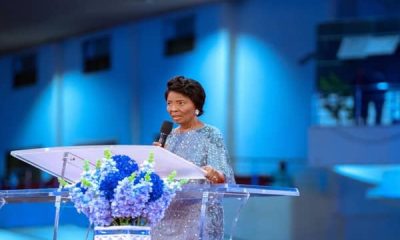

“I Am Living Proof That God Still Saves – Faith Oyedepo Shares Testimony”
Faith Oyedepo, wife of the Founder and General Overseer of the Living Faith Church Worldwide, Bishop David Oyedepo, has shared...


Olukoya Ordains 5,000 Pastors at MFM Global Ministers Conference
The General Overseer of Mountain of Fire and Miracles Ministries (MFM) Worldwide, Dr. Daniel Olukoya, has ordained 5,000 men and...
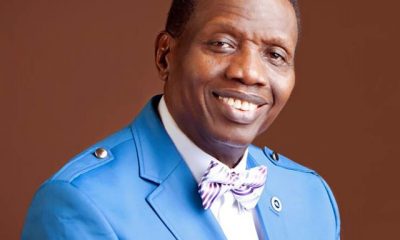

From Barefoot Village Boy to Global Spiritual Leader: Adeboye Inspires at Church’s 50th Anniversary
Pastor Enoch Adeboye, General Overseer of the Redeemed Christian Church of God (RCCG), has shared a moving account of his...

Clergy Urged To Put Members’ Welfare Above All Else
At a solemn ordination service in Abuja, senior church leaders have called on pastors to make the well-being of their...