
General News
Insecurity: Experts call for community policing


Security experts at a virtual meeting organised by the Nigeria Diaspora Network (NDN), United Kingdom (UK) chapter, have said that a well coordinated community policing system would address the present security challenge in Nigeria.
Some of the participants, who spoke at the meeting monitored by the News Agency of Nigeria (NAN) in Abuja, stressed that all hands must be on deck to check security problems.
The title of the meeting was: “Security Challenges and Community Policing.”
A security expert in Global Community Policing, Dr Aminu Audu, was optimistic that if adopted in line with international best practice, community policing would work in the country.
Audu, who authored a publication titled: ”Police Corruption and Community Policing in Nigeria: A Sociological Case Study,” said the issue of insecurity was not a new thing in the country.
“What we are seeing today is a product of series of activities that have transpired in the past. So it is a build up,” he said.
He said though there is insecurity in Nigeria, the way forward is community policing.
“According to Freeman in 1992, community policing is about policy and strategy to achieve more effective crime control, reduce fear of crime, improve quality of life, improve police services and police legitimacy through proactive reliance on community resources that seeks to change crime causing conditions,” he said.
He stated further that community policing would ensure the need for greater accountability of police, greater public share in decision making and greater concern for civil rights and liberty.
Audu said it was disheartening that when talking about community policing, “what comes to our minds is about forming vigilante group and arming them with weapons for them to begin to delve into prejudicial killings and manhandling of crime suspects.
“No, that is not the way. Community policing is about the police, the community coming together to address issues, most especially crime causing conditions.
“Now we are talking about insecurity, what happens
to poverty? How has poverty being addressed?
“Who are the people sponsoring those who carry guns?
“For example, I read sometimes ago that about 400 people have been arrested on allegation that they are sponsoring Boko Haram, I don’t know what has happened to them?”
The expert, who acknowledged the influence of foreign factor in the security challenge, said community policing would not be a success if the problem of poverty and other factors were not addressed.
He also said over the years, community policing had not worked effectively in the country because there has been a wide communication gap between the community and the security providers.
He urged people to desist from politicising the initiative.
“Do we really practice community policing accurately? So the problem is that it has been a guess work affairs,” he said.
Audu, however, commended President Muhammadu Buhari for his support for community policing.
“I really commend President Buhari for taking the step to implement community policing with a funding investment to the tune of about 26 million pounce.
“But how many governors or local government chairmen have taken it upon themselves to implement these policies according to specification?” he asked.
The National Economic Council (NEC) in a virtual meeting chaired by Vice-President Yemi Osinbajo had, on Aug. 20, 2020, approved the sum of N13.3 billion for the take-off of community policing initiative across the country.
“I am happy that the Federal Government is implementing based on empirical research. Now at the moment, they are undergoing process,” Audu said.
A Preventive Terrorism Consultant, Mr Temitope Olodo, said all the stakeholders should be ready to take it seriously if community policing would
work.
He said the system was the easiest way of policing but corruption had been the bane.
He said people had to own community policing to work.
“Community policing is all about people telling the authority what the security needs are and channelling the effort and resources to those areas to tackle them,” he added.
He also said to solve the problem, the country needed to look at the past and how we got to this present position.
According to Olodo, in Nigeria, we are not policing by consent, we are policing by force.
“If we police by consent, a lot of things that are happening in Nigeria will not be happening. I think that is where we have got it wrong,” he said.
Olodo, who is the president, African Security Forum and a retired Metropolitan police officer in the UK, enjoined the Federal Government to introduce a system of Key Performance Indicator (KPI) to measure the performance of all security officers
in the country.
“We need practical changes that we can turn around and say, this is the change that we want.
“I was a formal civil servant. If you ask me today, I have never seen the job description of IGP (inspector-general of police) and I am not making it personal.
“I don’t know what kind of KPI he is being measured against but I can tell you that we know the KPI of commissioner of police for the Metropolitan Police, we know the one for New York, Australia, etc.
“We know how police are being measured.
I was once a constable and I have KPI.
“When I was leaving the Metropolitan Police on secondment, I was measured on KPI.
“They brought out my KPI and that was the basis upon which if I am entitled to other benefits, in terms of my salary going up.
“But I don’t know what KPIs are for the Nigerian
police. If there is no KPI, what do you measure them against?” he asked.
Olodo explained that if there is no KPI, security officers’ performance indicators would not be proportionate to their work done.
A Cyber Security Professional, Mr Deji Adebayo, who is one of the NDN coordinators in the UK, said the meeting was organise as part of the effort by Nigerians living abroad to see how the security challenge could be solved towards creating a better and secured society for the country.
Other members of the NDN at the meeting include Dr Aminu Ahmadu, a lecturer and academic consultant within the UK universities; Mr Offor Okpanachi, an AML professional, among others.
NDN is an association of Nigerian professionals, who have come together to see how Nigeria can be moved forward.
NAN


At a solemn ordination service in Abuja, senior church leaders have called on pastors to make the well-being of their congregations a top priority, following the example of Jesus Christ.
Speaking during the priesthood ordination and installation of a Sub Dean at the Cathedral Church of Advent, Life Camp, Abuja, the retired Bishop of the Anglican Diocese of Okene, Rt. Rev. Emmanuel Ajulo, described pastors as shepherds charged with the care of their flock. He urged them to shun worldly distractions and focus on meeting the spiritual and material needs of their members.
Bishop Ajulo also encouraged the newly ordained priests to remain faithful to their calling by teaching God’s word without compromise.
In his charge, the Primate of the Church of Nigeria, Anglican Communion, Most Rev. Henry Ndukuba, urged the new clergy to preach the undiluted gospel and foster religious harmony wherever they serve. He expressed confidence that their new roles would help promote peace and unity in society.
The service also featured prayers for national leaders and divine intervention in addressing the current global economic challenges.
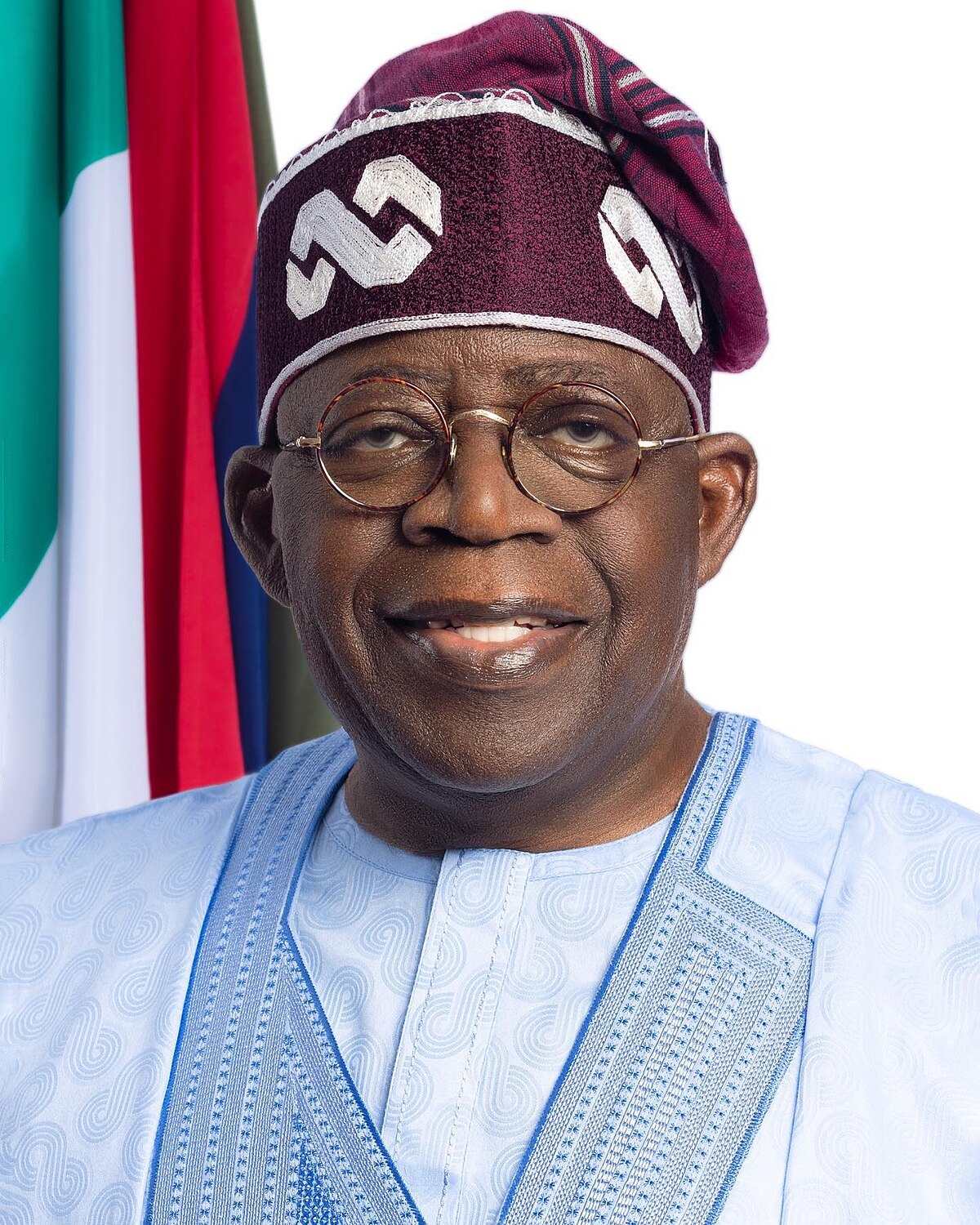
In a dramatic show of faith and patriotism, over 1,000 fiery prayer warriors from across Nigeria will descend on Ilorin, Kwara State, this Saturday, lifting their voices in intense intercession for President Bola Tinubu’s success and Nigeria’s survival in the face of biting economic woes and mounting insecurity.
The spiritual siege, themed “Walking in Domini”, is the maiden convention of the Organisation of African Instituted Churches (OAIC), with its Kwara State Chairman, Evangelist Thomas Adeboye, vowing that “heaven will hear and respond to Nigeria’s cry.”
Aside from marathon prayers, the gathering will roll out free medical outreach to locals across Kwara’s LGAs, a gesture aimed at touching both body and soul.
Adeboye, lamenting Nigeria’s “troubling economic and security realities”, called for a nationwide prayer uprising, insisting that Tinubu has shown the will to revive the nation but needs massive divine backing to succeed.
“Banditry, a collapsing economy, and political tension demand we seek God’s face like never before,” he declared. “We will storm heaven for wisdom for the President and governors to steer Nigeria to safety.”
The convention will also feature awards to distinguished personalities, soul-lifting worship, fiery sermons, and unity-driven lectures—all capped with thunderous prayers for Nigeria’s redemption.
Adeboye urged the President to ensure every policy has “a human face,” stressing that Nigerians must not only endure but also enjoy the fruits of governance.
With the OAIC promising to reaffirm believers’ authority in Christ and rally spiritual boldness in the face of national challenges, Ilorin is set to become the epicentre of a powerful spiritual warfare for Nigeria’s destiny.
…Church leaders accuse Welsh counterparts of “spiritual decadence” and “abandonment of faith”
The Church of Nigeria (Anglican Communion) has issued a forceful condemnation of the election of Rt. Rev. Cherry Vann, an openly lesbian cleric, as the Archbishop of Wales. The move is the latest in a series of developments that have deepened divisions within the global Anglican Communion over sexuality and doctrine.
In a statement from Primate The Most Rev’d Henry Ndukuba, the church denounced the election as a “serious departure from biblical teaching” and a sign of “spiritual decadence” and “an outright abandonment of the faith once delivered to the saints.”
Archbishop Ndukuba warned that Bishop Vann’s elevation compromises the Anglican Church’s global mission and could obstruct evangelism. He compared the situation to the controversial tenure of Most Rev. Katherine Jefferts Schori, former Presiding Bishop of the U.S. Episcopal Church, who also faced intense criticism from conservative Anglicans for her progressive views.
The Primate accused Bishop Vann of being complicit in the “ongoing crisis” around same-sex issues, stating that the election is a “clear revelation that many who claim to be members of the body of Christ cannot endure sound doctrine” (2 Timothy 4:3–4).
The Church of Nigeria called on Anglicans worldwide to reject “rebels” and “apostates” and to instead support conservative bodies like the Global Anglican Future Conference (GAFCON).
“The Church of Nigeria (Anglican Communion) condemns, unequivocally rejects, and will not recognize the election of Rt. Rev. Cherry Vann as Archbishop of Wales,” Ndukuba declared. He concluded with a solemn warning that without repentance, the Church in Wales risks losing “complete relevance” and its leaders will face judgment.

68 Nations Gather at Dunamis Glory Dome for 2025 Flaming Fire Conference
The 2025 International Ministers Flaming Fire Conference has drawn thousands of worshippers, church leaders, and delegates from more than 68...

“I Am Living Proof That God Still Saves – Faith Oyedepo Shares Testimony”
Faith Oyedepo, wife of the Founder and General Overseer of the Living Faith Church Worldwide, Bishop David Oyedepo, has shared...
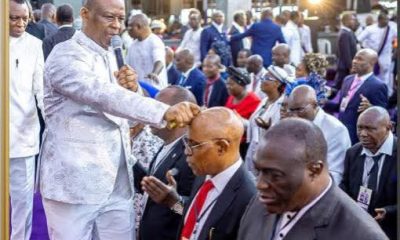

Olukoya Ordains 5,000 Pastors at MFM Global Ministers Conference
The General Overseer of Mountain of Fire and Miracles Ministries (MFM) Worldwide, Dr. Daniel Olukoya, has ordained 5,000 men and...
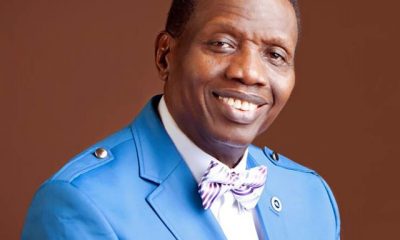

From Barefoot Village Boy to Global Spiritual Leader: Adeboye Inspires at Church’s 50th Anniversary
Pastor Enoch Adeboye, General Overseer of the Redeemed Christian Church of God (RCCG), has shared a moving account of his...

Clergy Urged To Put Members’ Welfare Above All Else
At a solemn ordination service in Abuja, senior church leaders have called on pastors to make the well-being of their...